Standing Rib Roast
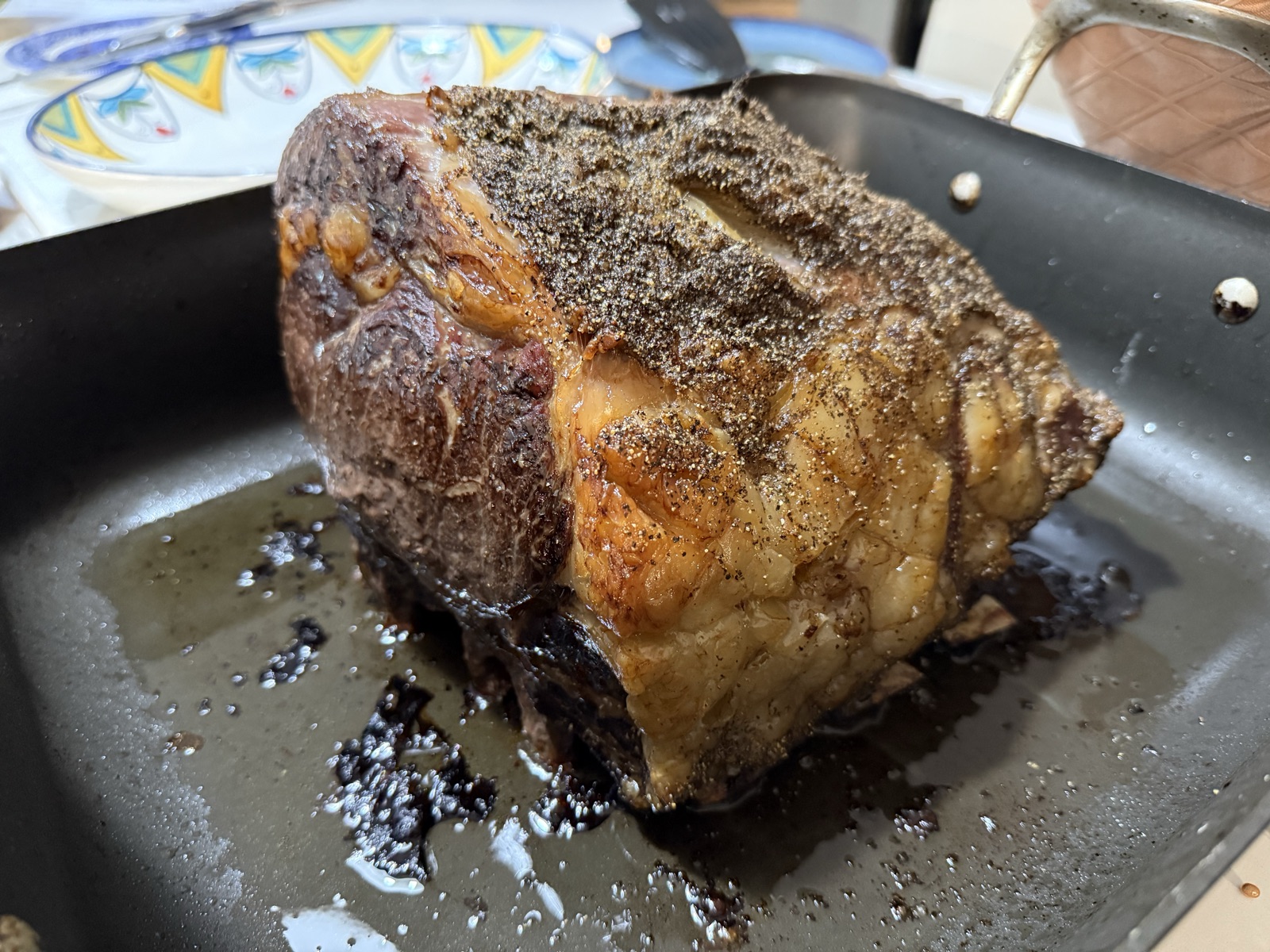
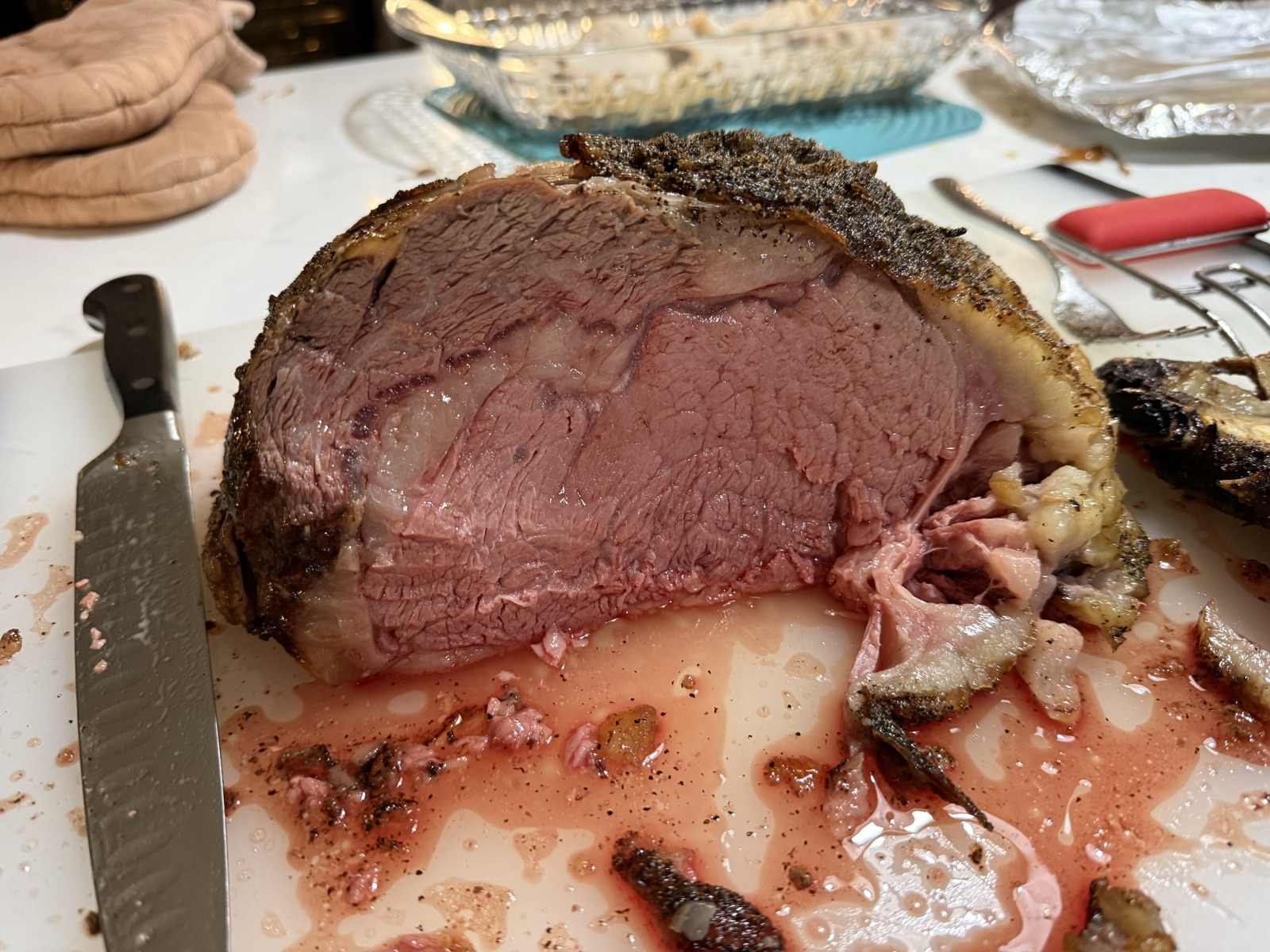
This uses the reverse sear method. The roast cooks slowly at a low temperature, rests, and then goes back into a very hot oven for a few minutes to brown the outside. This gives even pink meat from edge to edge and a crisp crust, and it is hard to overcook.
These times are for a 4 rib, bone-in roast of about 9 lb. Cook to temperature, not time. A probe thermometer that stays in the meat makes this much easier.
Ingredients
- 4 rib bone-in rib roast (prime rib), about 9 lb
- About 3 tbsp coarse sea salt (about 1 tsp per lb). Use about 2 tbsp if it is fine sea salt
- 2 tbsp coarsely ground black pepper
Prep
- Ideally, salt the roast the day before and leave it uncovered in the fridge overnight. If you are cooking it the same day, salt it as early as you can. Even 2-3 hours helps.
- Take the roast out of the fridge about 1 hour before it goes in the oven
- Pat it dry and season all over with the sea salt and black pepper. If it has already been salted, just add the pepper
- Stand the roast bone side down in a roasting pan. The bones act as a rack
- Push a probe thermometer into the center of the thickest part, keeping it away from the bones
Oven Temperature Schedule
| Stage | Temperature | Time |
|---|---|---|
| 1. Slow roast | 250 F | 3¼-4¼ hours, until the center reaches the pull temperature below |
| 2. Rest | Out of the oven, loosely covered with foil | 30-60 minutes |
| 3. Sear | 500 F (convection if you have it) | 8-10 minutes, until well browned |
Pull temperatures for stage 1
| Doneness | Take it out at |
|---|---|
| Rare | 115 F |
| Medium rare | 120-125 F |
| Medium | 130-135 F |
- Start checking the temperature at about 2¾ hours
- The temperature rises slowly and then can stall for a while. This is normal, so be patient
- The ends of the roast will be a little more done than the center, which is useful if some people prefer medium
- While the roast rests, turn the oven up to 500 F. It needs time to fully heat up before the sear
- The roast can rest for up to 90 minutes and stay warm, which gives you time to cook Yorkshire puddings or sides
- Serve right after the sear. There is no need to rest it again
Timeline
For eating between 4:00 and 5:00 pm:
- 10:30 am - take the roast out of the fridge and season it
- 11:30 am - roast goes into the oven at 250 F
- 2:15 pm - start checking the temperature
- 3:00-3:45 pm - roast reaches pull temperature. Take it out and rest it, and turn the oven up to 500 F
- 10-15 minutes before you want to eat - sear for 8-10 minutes
- 4:00-5:00 pm - carve and serve
If the roast is close to pull temperature before 2:30, turn the oven down to 200 F to slow it down. If it is not there by 3:45, turn the oven up to 275 F and rest it for just 20 minutes before the sear.
With Yorkshire puddings
Bake the Yorkshire Puddings while the roast rests, then turn the oven up for the sear. Use the fat from the roasting pan instead of olive oil.
- 3:15 pm - take the roast out and rest it. Turn the oven up to 450 F (convection bake)
- 3:30 pm - puddings go in at 450 F
- 3:45 pm - turn the oven down to 350 F. Don’t open the door
- 4:00 pm - take the puddings out and turn the oven up to 500 F
- 4:15 pm - sear the roast for 8-10 minutes. Put the puddings back in for the last 2-3 minutes to warm through
- 4:30 pm - carve and serve
Carving
- Cut along the bones to remove them in one piece, then slice the meat across the grain about ½ to ¾ inch thick
- Cut the bones apart and serve them too, as there is good meat on them
The reverse sear gives even pink meat from edge to edge:
Serving
- To make a quick jus, put the roasting pan on the stove over medium heat, add 2 cups of beef broth and a splash of red wine, and scrape up the brown bits. Simmer for 5-10 minutes and season with salt and pepper
- Serve with horseradish sauce. Mix ½ cup sour cream, 2-3 tbsp prepared horseradish, 1 tsp Dijon mustard, a squeeze of lemon and a pinch of salt